Perspective
Disability or Superpower?
The words we use shape the way we see ourselves and others. What happens when we stop asking what is wrong and start asking what is possible?
Disability or Superpower?
Today, terms such as Specific Learning Disability (SLD) describe profiles including dyslexia, dyscalculia, dysgraphia and ADHD.
For a society that celebrates diversity, should we also consider the strengths, abilities and different ways of thinking that accompany neurodivergence?
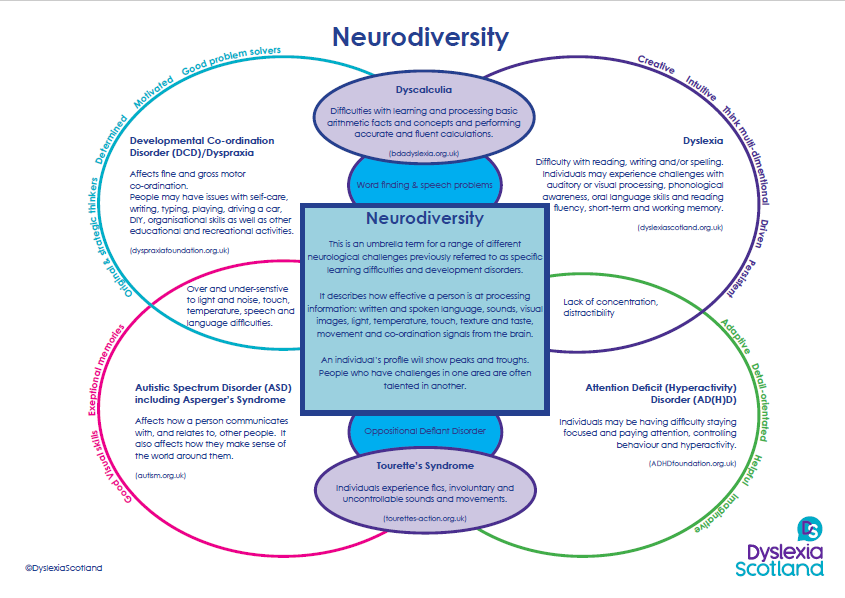
The Neurodiversity image below offers another perspective: our brains work differently, and those differences can bring both challenges and extraordinary strengths.
The spikey profile
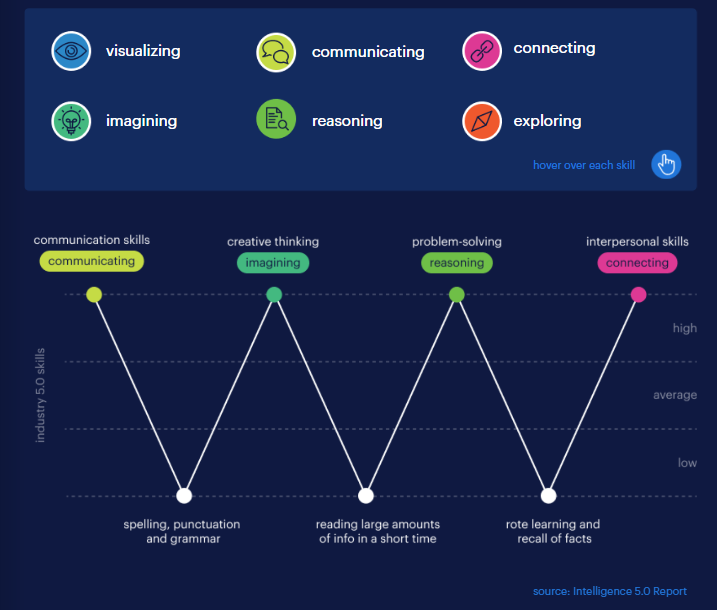
In reality, neurodivergent people tend to possess strengths as outstanding as their weaknesses. It is important that we consider both their attributes and challenges. (This spikey profile is characteristic of people with neurodiversity.)
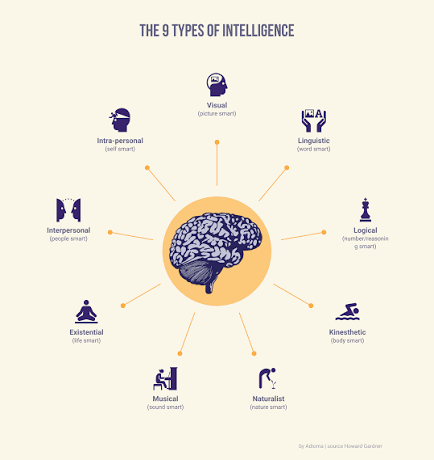
The 9 types of intelligence
According to Gardner's theory, what are YOUR intelligences?
According to Dr Helen Taylor's research and her theory of Complementary Cognition, neurodivergent ways of thinking may have played an important role in human evolution. Rather than viewing neurodiversity simply as a disability or deficit, Taylor proposes that it can be understood as part of a complex adaptive system.
Within this framework, neurodivergent brains may be particularly exploratory in nature, contributing different ways of thinking, problem-solving and generating new solutions in response to changing environments.
For further information, see Taylor's article: “Developmental Dyslexia: Disorder or Specialization in Exploration? — The Evolution of Complementary Cognition.”
Having completed a BA (Hons) in Social Anthropology, and as a neurodivergent learner myself, this theory resonates strongly with both my academic interests and personal experience.
Why language matters
The way we talk about dyslexia becomes the story a learner tells about themselves. A child who hears "you are dyslexic" without context may believe they are less capable. A child who learns that dyslexia means a different pattern of strengths and challenges, and that many successful people share this way of thinking, is far more likely to keep trying.
Helping learners name their strengths and their needs in equal measure is one of the most powerful gifts an educator or parent can give.
At Coach Gem, every session is built on the belief that different thinkers deserve to be understood, supported and celebrated. If you would like to explore what that looks like for you or your child, get in touch.